
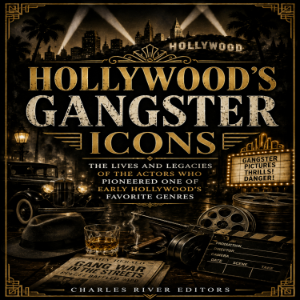
Hollywood’s Gangster Icons: The Lives and Legacies of the Actors Who Pioneered One of Early Hollywood’s Favorite Genres
Charles River Editors
Americans have always loved movie stars, and there have been no shortage of Hollywood icons, but one man has long been considered the greatest male star. From the time he first became a leading man, Humphrey Bogart’s screen image has resonated with...
Location:
United States
Description:
Americans have always loved movie stars, and there have been no shortage of Hollywood icons, but one man has long been considered the greatest male star. From the time he first became a leading man, Humphrey Bogart’s screen image has resonated with viewers more than perhaps any other actor. At the end of the 20th century, when the American Film Institute assembled its list of the 50 Greatest American Screen Legends, Bogart was at the top of the list. His persona as a tough guy who manages to maintain his sense of virtue no matter how compromising the situation features in some of the most famous films ever made, including Casablanca (1942), The Maltese Falcon (1941), and Key Largo (1949). Ultimately, it was portraying tough guys and gangsters in the 1930s that turned James Cagney into a massive Hollywood star, and they were the kind of roles he was literally born to play after growing up rough in Manhattan at the turn of the 20th century. In movies like The Public Enemy (which included the infamous “grapefruit scene”) and White Heat, Cagney convincingly and grippingly played criminals that brought Warner to the forefront of Hollywood and the gangster genre. Cagney also helped pave the way for younger actors in the genre, like Humphrey Bogart, and he was so good that he found himself in danger of being typecast. For most enthusiasts of film history, Edward G. Robinson’s name is virtually synonymous with the Depression-era gangster films of the 1930s. After all, Robinson starred in Little Caesar (1931), which was one of the first major gangster films and is perhaps the most representative example of the genre. Little Caesar remains his most iconic gangster role, but he acted in several other notable gangster films over the course of the decade, including The Little Giant (1933) and A Slight Case of Murder (1938). Even in the 1940s, after the gangster genre had ceded much of its standing to the postwar film noir genre, Robinson retained his ties to gangster films. Duration - 3h 44m. Author - Charles River Editors. Narrator - Mary Rossman. Published Date - Wednesday, 21 January 2026. Copyright - © 2026 Charles River Editors ©.
Language:
English
Opening Credits
Duration:00:00:11
Introduction
Duration:00:07:14
Bogart's Breakthrough
Duration:00:33:14
On Top of the Hollywood World
Duration:00:37:04
From Street to Stage
Duration:00:12:37
Public Enemy and Public Hero
Duration:00:32:14
The Gangster Goes Straight
Duration:00:28:43
An American Opportunity
Duration:00:20:45
Early Gangster Movies
Duration:00:19:54
The Rise and Fall of the Gangster
Duration:00:31:53
Ending Credits
Duration:00:00:12